

Dental implantology has made tremendous strides, with advanced tools transforming the accuracy and predictability of implant procedures. Among these innovations, the Implant Concierge Tooth Borne Surgical Guide stands out as a leading choice for precision and reliability in partially edentulous cases. Designed to deliver unparalleled accuracy, this guide streamlines complex procedures while ensuring exceptional outcomes. Here, we explore the scenarios where this guide excels, its innovative features, and provide practical tips for achieving optimal results.
When to Use the Tooth Borne Surgical Guide
The Tooth Borne Surgical Guide is versatile, catering to a wide range of cases where stability and precision are paramount. Specific applications include:
1. Partially Edentulous Cases
This guide is ideal for patients missing one or two teeth, a scenario that accounts for 75% of the guided cases at Implant Concierge. Its design ensures an intimate and secure fit that provides accurate placement for these “onesie” and “twosie” cases.
2. Terminally Dentate Patients
The benefits of a tooth borne guide are most noticeable in terminally dentate scenarios. The guide is effective, provided that supra-structures or teeth are present to support the guide during implant surgery, allowing extremely complex and multi-staged procedures to be simplified into a single appointment. This ensures adequate anchorage and reduces the risk of movement.
3. High-Precision Scenarios
Regarded as the most accurate surgical guide available, it is an excellent choice for situations demanding the utmost precision.
4. Limitations to Consider
While the guide’s design is highly adaptable, certain challenges may arise, including:
- Tight Inter-Occlusal Spaces: In such cases, using a side-entry sleeve can help navigate the limited opening
- Narrow Interproximal Areas: This may necessitate a pilot-only guide to avoid interproximal reductions
- Surgical Approach: Whether opting for a flapless or flap strategy, understanding the anatomy and patient-specific factors is crucial
Key Features of the Tooth Borne Surgical Guide
The guide’s thoughtful design ensures functionality and precision:
- Durable Construction: At 3 mm thick, the guide is robust enough to withstand surgical stresses while maintaining stability and access
- Comprehensive Coverage: It covers two-thirds or more of the dental arch, ensuring reliable placement and support
- Inspection Windows: Strategically placed windows allow clinicians to confirm the guide’s fit, ensuring no rocking or instability before or during the surgery
Diagnostic Data Requirements
Achieving the best results with the Tooth Borne Surgical Guide depends on providing accurate and comprehensive diagnostic data. Ensure the following:
1. Full Arch CBCT
Capture a full arch CBCT scan, ensuring the patient is out of occlusion. This provides a detailed view of the patient’s anatomy and facilitates an accurate registration to the digitized model.
2. Intraoral Scans (IOS)
Perform an IOS of the arch of interest. Ensure all tooth surfaces are captured, along with as much of the vestibule as possible. For maxillary cases, include the full palate.
3. Alternative Data Collection
If IOS is unavailable, take an alginate impression and ship an accurate diagnostic cast to Implant Concierge. While not mandatory, diagnostic photos can offer valuable supplementary information.
4. Soft Tissue Separation
While not required, separating soft tissue with cotton rolls in the patient’s vestibule enhances visibility and contributes to improved guide accuracy.

How to Use the Guide Effectively
Proper preparation and adherence to protocols are vital to maximizing the guide’s potential.
Pre-Surgery Checklist
- Fit Check: Test the guide for stability and proper fit three days before surgery. Use the inspection windows to identify any potential rocking.
- Inspect Tissue Contact: Examine the intaglio surface to ensure it accommodates the tissue without undue pressure.
- Review Protocol: Carefully read the Surgical Protocol Sheet for any special instructions that aid in the fit and use of the guide.
Surgical Best Practices
- Apical Pressure: During surgery, always maintain firm apical pressure on the guide to ensure stability
- Drill Insertion: Fully insert the drill into the sleeve before beginning drill rotations. This minimizes movement and enhances precision
- Pumping Motion: Use vertical pumping motion to ensure copious irrigation and reduce drag on the sleeves
Handling Sleeve Dislodgment
If a sleeve dislodges during surgery, there’s no need to panic. Simply reposition the sleeve within the guide and continue the procedure as planned.
Immediate Restorative Options
For clinicians aiming to deliver immediate results, the guide offers compatibility with innovative Surgery-Ready provisional options.
1. Custom Tissue Former
Ideal for posterior sites or immediate extraction and placement cases. This option also works seamlessly with an essix retainer. The tissue former, made from nano-ceramic resin is bonded to a ti-base and utilized to mimic the ideal emergence profile and support the tissue during healing. The Custom Tissue Former is available in pink or tooth shades.
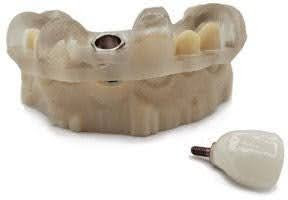
2. Full Contoured Screw-Retained Crown
This option is ideal for immediate cases that require esthetic restorations. Printed with nano-ceramic resin and bonded to an engaging or non-engaging ti-base, it offers immediate tissue support to enhance healing and an esthetic result.
Why Choose the Tooth Borne Surgical Guide?
The Tooth Borne Surgical Guide is more than just a tool; it is a gateway to achieving predictable and precise results in dental implantology. By following best practices and utilizing its advanced features, clinicians can streamline their workflow, reduce surgical risks, minimize appointments, and enhance patient satisfaction with accurately placed implants and surgery-ready provisionals.
To learn more about this groundbreaking guide and how it can elevate your practice, visit Implant Concierge.